Scriptabl’s legal e-signing solution was designed to replace paper-based medical prescriptions with a secure, compliant digital alternative for the healthcare industry in South Africa. However, the initial user onboarding process was hindered by chronic UX inefficiencies, particularly during the face-to-face verification phase.

Our challenge was redesigning this process to boost enrolment rates and support scalable business growth.

  • UX Research
  • Focus Groups
  • UX Design
  • Stakeholder Analysis
  • Collaboration

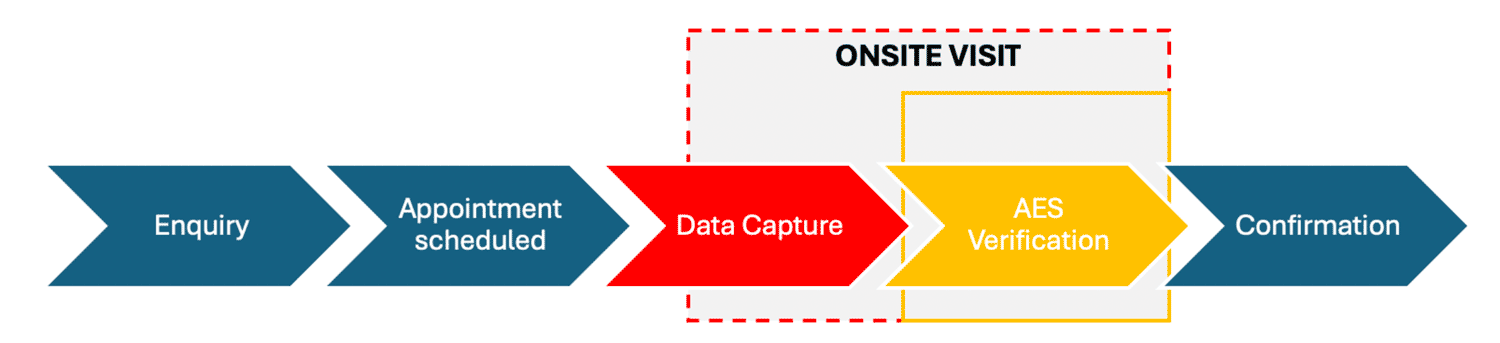
Delays and inefficiencies hindered onboarding during the data capture and (legally required in-person) AES verification process.

THE CHALLENGE

We kicked off the project with in-depth discovery workshops to understand the client’s vision, audience, and goals.

The Business Context

  • Objective: Increase the number of completed enrolments per week from 10 to a target of 60, thereby boosting recurring revenue.
  • Problem: The onboarding process required doctors to complete forms and attend in-person verification events. Enrolment agents spent 60% of their time on site capturing data rather than completing the enrolment, creating a significant bottleneck.

  • Impact: Low efficiency led to a shortfall in monthly revenue and left the business far from breakeven.

User Pain Points

  • Time-Consuming Process: Due to manual data capture and multiple steps, onsite visits took an average of 20 minutes per user.
  • Operational Friction: Enrolment agents felt demotivated as they could not meet targets, while external agents struggled with repetitive administrative tasks.
  • Preparation Demands: Doctors were required to complete data capture before or during the appointment, adding extra friction to an already complex process.

OUR PROCESS

Research and Analysis

  • Stakeholder Interviews: We gathered detailed feedback from enrolment agents, doctors, and practice managers to understand the bottlenecks and inefficiencies.
  • Data Analysis: An in-depth review of enrolment metrics and revenue data highlighted that agents achieved only 30–36% of their targets.

  • Root Cause Analysis: Techniques like the Fishbone Diagram and 5 Whys were used to identify that 80% of the onboarding process time was wasted on data capture.

Design and Iteration

  • Service Design Principles: We introduced a new role for the practice manager, which involves pre-populating user data before the on-site visit. This change was designed to reduce the time spent on each enrolment drastically.

  • Streamlined Process: The revised process made onboarding more linear and systematic. Data capture was shifted to occur before the appointment, freeing the enrolment agent to focus on verification and signing.

  • Agile Prototyping: Using an iterative approach with 2-week sprints, we developed and tested prototypes with key stakeholders, incorporating their real-time feedback.

Implementation and Collaboration

  • Cross-functional Teams: Collaboration among the UX team, product managers, developers, and legal experts ensured the solution was user-friendly and compliant.
  • Compliance Assurance: The legal team reviewed the proposed UX and process changes to ensure alignment with the ECT Act and other regulatory requirements.
  • Technology Integration: The mobile app was updated to include a new workflow that enabled practice managers to complete pre-appointment data capture, resulting in a smoother in-person experience.

User Analysis

Before

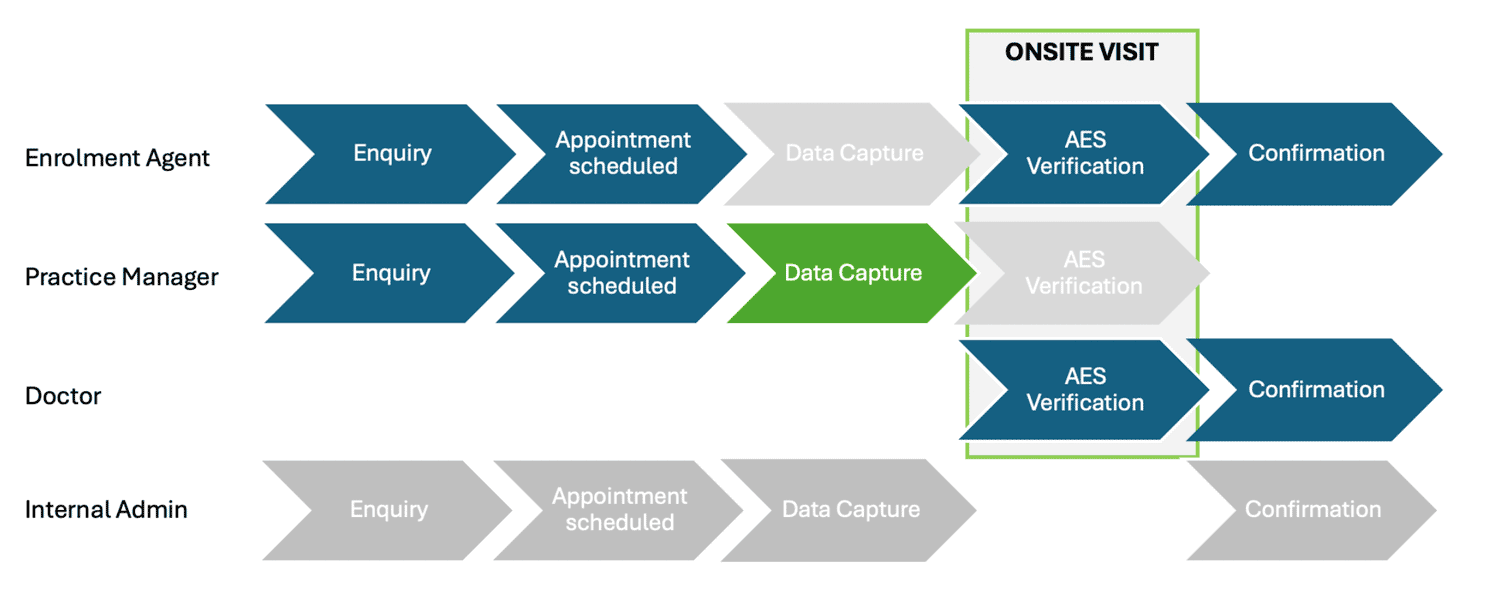
The Doctor was expected to capture the required data during the onsite visit, which caused delays and inefficiencies.
After

The Practice Manager becomes responsible for capturing the required data before the onsite visit.

RESULTS AND IMPACT

Efficiency Gains

  • The revised onboarding process reduced onsite visit time per user from 20+ minutes to under 7 minutes, significantly increasing the potential number of enrolments per hour.

Enhanced User Experience

  • Enrolment agents reported improved satisfaction as they could focus on core tasks without being bogged down by repetitive administrative work.

Revenue Uplift

  • With the potential to double the number of enrolments, the redesigned process paved the way for the business to reach its breakeven point faster, with increased recurring subscription revenue.

Scalability

  • The improvements provided a scalable model that could be integrated into further digital transformation initiatives and partner integrations.
CONCLUSION

This project is an excellent example of how user experience and service design can intersect to solve real business challenges. By understanding the roles and pain points of each stakeholder—from enrolment agents to practice managers—we were able to streamline the process, improve efficiency, and ultimately contribute to the business’s strategic growth goals.